
Here’s a surprising truth: in many countries, the “hardest” part of getting accepted isn’t the exam or grades—it’s the paperwork timing. I’ve seen students who scored well still miss deadlines because a translated document was stamped wrong, or a bank proof didn’t match the exact format the school asked for.
If you’re trying to study abroad or just want a clear plan for different systems, top 10 admission requirements around the world (and how to prepare for each) gives you a practical checklist. You’ll learn what schools commonly ask for, where students get stuck, and what to do starting this week. As of 2026, many places still use the same core requirements, but the exact forms and platforms can change—so preparation matters.
Featured snippet: What are the most common admission requirements worldwide?
The most common admission requirements around the world are academic records, proof of language skills, standardized tests (in some countries), an application form with personal documents, and an assessment step like an interview, audition, or portfolio review.
Even when the system looks different—like the UK’s UCAS process or the US’s holistic review—the “building blocks” are usually the same. Your goal is to make each building block easy for the school to verify.
1) Academic transcripts & grade history (almost everywhere)
Key takeaway: Admission teams start with one question: can your grades show you’re ready for the next level?
An academic transcript is a record of the classes you took and the grades you earned. Some schools want it as a student-issued copy, others want an official copy sent directly by your school. Either way, you should plan ahead because transcript requests can take 2–6 weeks.
What most people get wrong is thinking a transcript is “just grades.” In many countries, the transcript must show your full grading scale, the total course credits, and sometimes your class rank. If you’re switching systems (for example, from a national high school to an IB program), include supporting notes explaining the curriculum.
How to prepare for transcripts for top 10 admission requirements around the world
- Ask early: Request official transcripts at least 8 weeks before your application deadline.
- Check the grading format: Make sure your school includes the grading scale (like 0–20, A–F, or numeric marks).
- Keep course titles consistent: If your transcript uses different names from your application form, update your documents so they match.
- Plan for translations: If the school requires language translation, start that process 4–8 weeks ahead. Translation delays happen often.
If you’re building an application timeline, you may also find this helpful: how to build a study abroad application timeline (timing is where a lot of applicants lose points without realizing it).
2) Proof of language proficiency (IELTS, TOEFL, and local tests)
Key takeaway: Language tests are not only for “English-speaking countries”—they’re used anywhere the program is taught in another language.
Language proficiency is often required for degree programs taught in English or another language. Most universities ask for scores from IELTS or TOEFL for English programs. Some also accept Duolingo English Test (DET) or internal assessments, depending on the school.
Here’s a real-world scenario I’ve seen: a student needed 6.5 overall on IELTS, but they only improved their reading and writing. Their speaking stayed low, and the overall score didn’t reach the requirement. That student wasted 3 months re-taking the exam because they didn’t study by sub-scores.
How to prepare for IELTS/TOEFL and other language exams
- Target the “overall” and the “minimum section”: Many schools list both. Write your target numbers on paper and train to hit them.
- Practice with timed sections: If your writing takes 45 minutes in practice, it will almost never work on test day where you get about 60 minutes for IELTS writing Task 2.
- Use real materials: ETS for TOEFL prep (for practice tests), or official IELTS practice tools. Random apps can help, but they don’t always match the exam style.
- Build a “correction loop”: For writing, get feedback (teacher, tutor, or a reliable writing correction service) every 1–2 weeks.
3) Standardized tests (SAT/ACT, entrance exams, or country exams)
Key takeaway: Standardized tests often decide eligibility, but your preparation plan should match the exact format.
In the US, many universities use SAT or ACT scores, though some schools are test-optional. In other countries, entrance exams are more common and can be the main selection step. For example, some programs require a national exam for university entry.
Tests are stressful because they feel “one shot,” but you can train the format. A good score usually comes from good pacing, not just knowing facts.
How to prepare for standardized tests worldwide (practical steps)
- Learn the test structure first: Number of questions, time limits, and question types.
- Do a baseline score: Take a full practice test under time limits to see where you lose points.
- Fix gaps by topic: Don’t only review wrong answers. Group errors by skill (algebra basics, grammar rules, reading inference).
- Practice with “pacing sets”: For example, for reading sections, practice 3–4 passages at real speed and check your time.
- Prepare your documentation: For many test centers, you need the right ID. Make sure your name matches your passport.
If your program uses tests and you need a focused study plan, check our study guide for admissions tests for a week-by-week approach.
4) Personal statement / statement of purpose (especially for universities)
Key takeaway: Your essay is where you explain fit—why this program, why now, and what you’ll do with the opportunity.
Many universities ask for a personal statement, a statement of purpose (SOP), or short written responses. The prompt may look different, but strong essays usually share three things: clear goals, proof you’ve explored the field, and honest reasons you’re a match.
The biggest mistake I see is writing a long story with no clear point. A school reads hundreds of essays, and if the reader can’t quickly find your main idea, they move on.
How to write a standout personal statement for top 10 admission requirements
- Use a simple structure: 1) hook or key moment, 2) what you studied or did, 3) why the program matches your plan.
- Show evidence: Name a project, course, internship, book, or competition. Even small things count.
- Be specific about classes: Mention 2–4 courses or modules the program offers. This makes your essay feel real.
- Keep it clean: Avoid repeating your CV. Use the essay to connect the dots.
- Get feedback from one strong reader: A teacher who knows admissions language can spot gaps faster than 5 friends.
5) Letters of recommendation (teacher/professional references)

Key takeaway: A great recommendation letter has examples, not just compliments.
Many universities require 1–3 letters of recommendation. Some programs specify teacher vs. mentor vs. employer references. Schools usually want signed letters, often submitted through an online system.
What students get wrong is asking for letters too late or sending vague instructions. A recommender can’t write a strong letter if they don’t know which parts of your work you want highlighted.
How to prepare your recommender packet (so you don’t waste time)
- Send a clear deadline: Include the exact submission date and time zone.
- Provide your brag sheet: A one-page summary of achievements, projects, and grades in the relevant courses.
- Remind them of context: “In your class, I did X and received Y feedback.”
- Share your goals: Tell them what program you’re applying to and what skills you want them to mention.
- Follow up politely: If it’s 3–5 days before the deadline and you haven’t seen progress, send a short reminder.
Tip: if you’re applying to multiple schools, ask if the letter can be reused. Some systems let your recommender submit once per application cycle.
6) Interview, oral exam, or applicant conversation
Key takeaway: Interviews test clarity and motivation, not just your “confidence.”
In many places, interviews are common for competitive programs, graduate study, scholarship selection, and some professional courses. Some interviews are formal and scored, others are informal but still recorded or evaluated.
I’ve had students tell me, “I know the answers, but I froze.” That usually happens when they didn’t practice explaining their story in simple terms. The best interview answers are short, organized, and honest.
How to prepare for admission interviews worldwide
- Practice a 60-second introduction: Your background, your interest in the field, and your goal.
- Prepare 5 story examples: A challenge you handled, a project you did, a failure you learned from, teamwork, and a leadership moment.
- Read the program page: The panel often asks “Why us?” and expects you to know 2–3 specific offerings.
- Do mock interviews: Use Zoom with a friend or teacher. Record it so you can fix rushed answers.
- Bring language support if needed: If English isn’t your first language, practice slowing down and pausing.
7) Auditions, portfolios, and creative work samples
Key takeaway: For arts and design, your portfolio is your transcript in a visual form.
Programs like architecture, fine arts, film, music, and design often require a portfolio or audition. The school wants to see your process, not just your best final piece.
Many students misunderstand the “process” part. If you submit only final images, the panel can’t tell how you think. Add sketches, drafts, experiments, and notes about what you learned.
How to prepare a portfolio that matches admissions expectations
- Check the rules: File formats (PDF/JPG/MP4), size limits, and required number of pieces.
- Select variety: Show range in skill. If your program is design-heavy, include layout work, concept sketches, and prototypes.
- Add a short caption per item: 2–3 lines on what you made and why.
- Include early drafts: One piece should show the “before” version and how it improved.
- Do a final quality check: Make sure images are clear and videos have audio if required.
For creative programs, start your portfolio 6–10 weeks before the deadline. Upload systems can be slow, and you want time to fix broken links.
8) Medical checks and student wellbeing forms
Key takeaway: Some countries and universities treat health documents as part of eligibility, not a “later step.”
For certain programs—especially for international students, boarding schools, sports-related courses, or programs with strict campus rules—schools may request medical certificates, vaccination records, or health forms.
As of 2026, the required documents vary a lot. Some require tests within the last 3 months. Others want specific vaccinations. Missing a single signature or using an old certificate is enough to delay enrollment.
How to prepare for medical and vaccination requirements
- Make a document list: Vaccination proof, general medical exam, TB test (if requested), and immunization records.
- Check validity dates: If the school requires “within 90 days,” schedule your appointment early.
- Keep digital scans: Take clear photos of documents so you can upload quickly.
- Plan for appointments: If you need tests (like TB screening), booking can take time.
9) Financial proof, scholarships, and affordability documents
Key takeaway: Many schools need proof you can pay before they issue final acceptance steps.
International students often need to show funds for tuition and living costs. Some universities ask for bank statements, sponsorship letters, and budget estimates. Some scholarship applications also require separate statements or proof of need.
What catches people is the exact format. A bank letter that shows a different name spelling, or a statement that’s too old, can lead to delays. I once saw an acceptance delayed because the student’s sponsor letter didn’t match the currency conversion the university used.
How to prepare financial documents for admissions around the world
- Confirm the amount required: Use the school’s published tuition + living estimate for the correct year.
- Match names exactly: Use the same spelling as on your passport.
- Use fresh documents: Many schools require bank statements from the last 1–3 months.
- Prepare a simple budget: Tuition, housing, food, local transport, health insurance, and a small buffer.
- Apply early for scholarships: Scholarship deadlines often happen before or alongside regular admissions.
10) Visa-related documents and pre-enrollment steps (often overlooked)
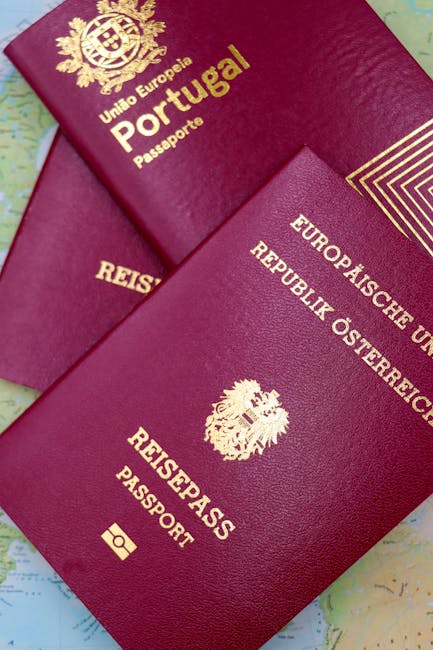
Key takeaway: Your admission acceptance is only part of the journey—visa documents can be a “hidden requirement.”
For students moving to another country, final enrollment often depends on immigration paperwork. That usually means you need an acceptance letter, proof of funds, health documents, and sometimes a background check or police certificate.
This is where people get tripped up: they plan for admission but not for the time the visa process actually takes. In 2026, processing times can still vary based on country, season, and document quality.
How to prepare visa documents after you’re admitted
- Read the visa checklist in full: Don’t rely on a friend’s experience if the form requirements changed.
- Keep a “document folder”: Passport scans, photos, acceptance letter, bank proofs, and medical certificates.
- Double-check photo rules: Size, background color, and face position matter more than people think.
- Book early for appointments: If biometrics are required, the appointment can be weeks later.
Note: I can’t tell you the exact visa rules for your country because they change and depend on your citizenship. But you can follow the school’s official guidance and your government immigration website step-by-step.
People Also Ask: Quick answers to common admission questions
What do universities look for most in applications?
Universities usually look for readiness (grades and course level), fit (why that program and that field), and proof you can succeed (language ability, tests if required, and evidence from your work). For competitive programs, they also look for clear motivation and communication skills, especially in interviews and essays.
How early should I start preparing for admissions requirements?
If you need documents like translations, official transcripts, or test scores, start 6–9 months before the deadline. For simpler applications, 3–4 months can still work, but only if you already have your core materials ready. In 2026, I recommend planning for delays like transcript processing and test booking.
Do I need tests if I have good grades?
Sometimes yes, sometimes no. Some schools use tests to compare applicants across different education systems, while others focus on grades and personal fit. Always check the program’s entry requirements page for the exact rule and look for “test optional” or “waived” notes.
Can I submit the same personal statement to multiple universities?
You can reuse parts, but you should customize at least the program-specific pieces. Many application forms include short prompts like “Why this university?” or “What interests you about our curriculum?” If you copy-paste a generic essay, your fit looks weak.
A comparison table: requirements by student “type”
Key takeaway: Different students need to focus on different requirements first. Use the table to prioritize.
| Student goal | Top requirements to prioritize | Common risk |
|---|---|---|
| Starting a bachelor’s degree | Transcripts, language proof, tests (if needed), personal statement | Missing translation or transcript deadlines |
| Applying to art/design programs | Portfolio, audition/creative work samples, short written explanation | Only submitting final作品 with no process |
| Graduate programs (masters/PhD) | Statement/SOP, letters of recommendation, test scores (program-dependent), CV | Generic goals that don’t match faculty research |
| International student moving countries | Admission documents, financial proof, medical checks, visa paperwork | Visa timing not matching the school’s enrollment steps |
My practical 7-step plan to prepare for the “top 10” requirements
Key takeaway: If you follow a simple order, you avoid the most common mistakes.
- Make one master checklist: Write the exact requirements from each school into one document.
- Set deadlines from the school’s side, not yours: Add 2–3 weeks buffer for documents and uploads.
- Lock your language test strategy early: If you need IELTS/TOEFL, book the exam dates before you write your essay final version.
- Request transcripts and translations together: Don’t do them one by one unless you want delays.
- Draft essays before you collect everything: You can refine with updated grades or new project details later.
- Prepare recommender packets right away: Give your references time to write meaningful letters.
- Build “proof of readiness” for every step: Even financial documents, portfolio pages, or interview notes should be clear and easy to verify.
If you like checklists, you might also enjoy our common application mistakes and how to avoid them. The best students don’t just study—they manage their process.
One angle most guides miss: admissions requirements change, but your evidence should stay consistent
Here’s the part that feels unfair: schools may change platforms, update forms, or tweak language score policies. But your evidence—grades, projects, recommendations, and proof of language—can stay consistent if you keep it well organized.
In my experience, the students who get the fastest approvals are the ones who build a “personal admissions archive.” They keep a folder with: official transcripts, translated copies, a test score report PDF, a CV, and their essay drafts. When a university asks for something again, they respond in hours, not days.
This doesn’t have to be fancy. A Google Drive folder structure like:
- 00_Master_Checklist
- 01_Transcripts
- 02_Language_Scores
- 03_Essays_and_Prompts
- 04_Recommendations
- 05_Portfolio_Audition
- 06_Financial_Proof
- 07_Visa_Documents
That kind of setup makes you feel calm during stressful deadlines. And calm applicants usually submit cleaner, more accurate documents.
Conclusion: Start with the requirement that takes the longest to get
For top 10 admission requirements around the world (and how to prepare for each), the real win is preparation order. Academic transcripts, language tests, portfolio building, and financial/medical documents often take the most time. Interview practice and essays are fast if you start with a clear plan, but they still need drafts and feedback.
Actionable next step: pick one school and write down its exact requirements. Then schedule backwards from the deadline, starting with the document that needs the most time (usually transcripts, translations, or test dates). If you do that, you’ll avoid the most common problem I see every year—being ready academically but not administratively.
Featured image alt text suggestion: Top 10 admission requirements around the world checklist for students preparing documents
About the Author