Here’s the honest truth about admissions: most universities don’t read your essay like a story. They read it like evidence. Evidence of your fit, your thinking, and your real effort. That’s why “great writing” alone rarely wins an offer.
When you understand what happens inside the application review, you can stop guessing. You can format your CV so it’s easy to scan. You can write essays that answer the questions reviewers actually ask. And you can avoid the small mistakes that quietly knock strong students out of the running.
This guide breaks down what universities look for in your essays and CV, step by step. I’m writing this from experience reviewing drafts with students and helping families fix applications for 2026 intakes—especially when the student is talented but the documents don’t “show it” clearly.
Inside the Application Review: How admissions teams actually read your essay
Admissions readers usually start with a quick scan, then a closer read, then a final check. Your job is to make each stage easy for them.
In many universities, essays are read alongside other parts of the application: predicted grades, course choices, references, and any required forms. The essay isn’t judged in isolation. It’s matched to what you’ve already shown.
What reviewers look for first: clarity and match. If your essay title sounds impressive but your examples don’t fit the program, reviewers notice fast. They want a student who understands what they’re applying for.
What they look for second: thinking. I mean how you explain your choices, not how fancy your sentences are. Strong essays show cause and effect: “I tried X, I learned Y, and that led me to choose Z.”
What they look for last: consistency. Your essay should fit your CV, your grades, and your reference letter. If your CV says “I’ve loved robotics for years” but your essay talks only about art workshops, readers assume either you’re confused—or you’re stretching the truth.
What universities want in your CV: scan-friendly proof of impact
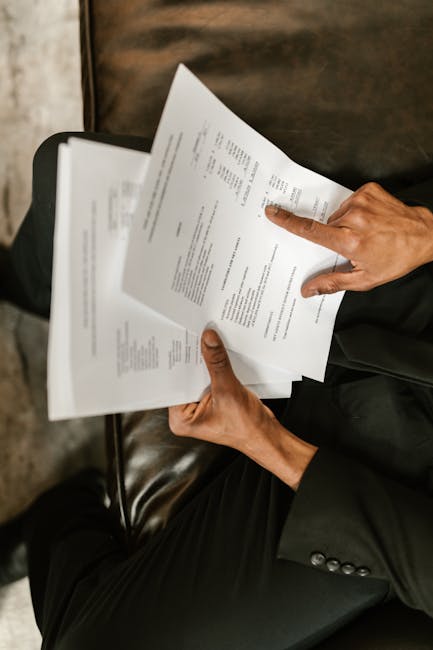
A CV is not just a list of things you did. It’s a “read in 60 seconds” document that proves your impact.
Most reviewers don’t have time to hunt. In practice, I’ve seen strong students lose points because their CV is hard to skim. For example, if dates are missing, a busy reader can’t tell if activities are recent or one-off.
Here’s the real goal: make your CV easy to check for three things—what you did, when you did it, and what changed because of it.
CV basics that pass the “quick scan” test
Use a simple layout. Keep fonts readable. Put dates in the same place for every entry.
- Dates: Use Month Year – Month Year. If it’s ongoing, write “Present (2026)”.
- Location: Optional, but helpful for programs and projects.
- Bullets, not paragraphs: 3–5 bullets per role is plenty.
- Action + result: “Led a team of 6 to build…” beats “Responsible for…”
- Numbers: add real details when you can (hours, participants, scores, budget).
Even if you don’t have big awards, you can show results. For example, “Tutored 8 students weekly; class test average improved from 52% to 68%” is clear proof. If you don’t have test data, write about a concrete output: “Created 25-page study guide used for weekly review sessions.”
Common CV mistakes that hurt even good students
These mistakes are so common that I treat them like red flags during a review.
- Too many activities with no depth: It looks busy, but it doesn’t show skill.
- Generic bullets: “Worked hard” or “Learned a lot” tells nothing.
- No dates or unclear timelines: Reviewers can’t match your growth.
- Mixed fonts and messy spacing: One distracted reader may move on.
- Hobbies taking over: A hobby can support your story, but it shouldn’t replace school-related proof for a program focused on academics.
If you’re aiming for study tips and CV clarity, you’ll probably like our related post on how to write a strong personal statement for university. It pairs well with what admissions readers look for.
What universities look for in essays: structure, evidence, and fit
Essays are judged on three things: structure, evidence, and fit. If any one is missing, the whole piece feels weak.
Structure means the reader always knows what’s coming next. Your essay should move in a clean line, not zig-zag.
Evidence means you show proof through examples, not opinions. “I enjoy learning” is an opinion. “I built a model, tested it 12 times, and improved accuracy by 18%” is evidence.
Fit means your goals match the program you’re applying to. Many students write an essay that works for any university. Admissions teams hate that because it sounds like copy-paste.
A simple essay formula that doesn’t feel robotic
I don’t like formulas that turn students into robots, but I do like a clear path. Here’s one you can use while still writing naturally:
- Start with a moment: a real situation you faced.
- Explain what you learned: not just facts—your thinking.
- Show action: what you did next.
- Connect to the program: name a module, lab, club, or teaching style.
- End with future direction: a clear plan for what you’ll study and why.
Notice how this formula forces evidence and fit. If you skip those steps, admissions readers can’t trust your claims.
People Also Ask: What do universities look for most in essays?
Most universities look for fit, maturity, and evidence of real effort. They want to see that you understand your interests and you can explain your growth clearly.
In most real reviews, essays are not scored like a test. But reviewers still use a mental checklist. Here are the items that show up again and again.
1) Fit with the study program
Fit is not “I love this topic.” Fit is “Here’s why this program matches what I want to learn next.”
To prove fit, you don’t need to write a long paragraph about the university website. You just need one or two specific references. For example: “I want to take the course in data analysis because I’m already building skills in statistics through my internship.”
2) Evidence of thinking and learning
Admissions readers love growth stories, but only when they’re real. “I struggled, then I improved by doing X” is the heart of many strong essays.
What most people get wrong: they make growth sound effortless. In real life, improvement takes time. If you mention a mistake and what you changed, your story feels honest.
3) Communication that’s easy to follow
This is surprisingly important. If your essay is hard to follow, a reader may interpret that as low clarity in your academic work.
Read your essay out loud. If you stumble on a sentence, fix it. A strong essay sounds like a real student speaking, not like a brochure.
People Also Ask: How do admissions readers score essays?
Many universities use a rubric (a scoring guide), but it varies by school. Some programs score based on clarity and fit. Others focus on personal qualities like motivation and communication.
Even when there is no formal rubric, readers still compare essays within the applicant pool. So the “scoring” happens in a practical way: what feels strongest, clearest, and most relevant.
What a typical informal scoring mindset looks like
Here’s what I’ve seen reviewers do when they’re tired but still careful.
- Clarity: Can I understand this without rereading?
- Depth: Did they explain learning with specifics?
- Consistency: Does this match the CV and references?
- Professional tone: Not stiff, but respectful and clear.
- Risk and honesty: Do they acknowledge limits without self-sabotage?
If your essay gets high clarity but no depth, it can still fall behind. Depth is usually where you stand out.
People Also Ask: Should my CV and essays match exactly?
Your CV and essays should match in facts and themes, not in every sentence.
Matching exactly can make you look repetitive. But mismatching in key points is a problem.
Fast consistency check (do this before you submit)
- Your essay’s main project should appear on your CV.
- Your essay’s dates or timelines should not contradict your CV.
- Your essay should not claim achievements you can’t back up in the CV.
- Your “future goal” should fit your current choices and courses.
If you’re unsure, keep a one-page “source list” while writing: all your activities, proof documents, and what each thing supports. This makes your essay and CV feel like one story.
Real-world scenarios: how reviewers react to different applicants

To make this less abstract, here are three real-world patterns I’ve seen in 2026 application cycles.
Scenario A: The student with strong grades but a vague essay
They write well, but the essay sounds like a list of interests. The CV shows activities, but the essay doesn’t explain learning. Reviewers assume the student wants the program “because it’s good,” not because it’s right for them.
Fix: add one full example with numbers or clear steps. For instance, explain what you did in a project and what result you got. Then connect that to a course or lab.
Scenario B: The student with amazing projects but a messy CV
They built apps, won competitions, or led clubs. But the CV is hard to read: unclear dates, no bullet results, and mixed formatting. Reviewers get tired. They don’t always dig deeper when the document looks chaotic.
Fix: rewrite CV entries with a consistent bullet structure and add metrics. Even simple metrics help: “saved 3 hours/week,” “served 40 clients,” “improved accuracy from 70% to 82%.”
Scenario C: The student with a great story but weak “fit”
They write an emotional essay about personal challenges. It’s moving. But it doesn’t connect to the academic program. That’s a common problem when students focus only on personal meaning.
Fix: keep the personal part, but add academic direction. Show what you learned and how it will shape your study choices. A strong conclusion should point forward to specific learning goals.
How to write your essay for the program you’re actually applying to
Specificity wins because it’s harder to fake. The fastest way to improve your essay is to tailor your “fit” section, not your whole essay.
Here’s a practical method I use with students: build a “program match list” in plain language.
Step-by-step: build a program match list in 25 minutes
- Pick 2–4 program items: courses, labs, teaching methods, internships, or project types.
- Write what you want to learn: one sentence per item.
- Match your evidence: one bullet from your CV that proves you’re ready.
- Write your connection: “This matters because…” in 2–3 sentences.
When you do this, the essay stops sounding generic. It becomes a clear plan.
If you want more guidance on choosing the right place, check our category page for how to choose the right university program. It helps with fit decisions before you even start writing.
CV format for 2026: what works in different regions
CV styles can differ depending on where you apply. But the scanning rules are similar everywhere.
As of 2026, many admissions teams prefer clean formatting that converts well to PDF. If your CV looks great on your laptop but breaks on another device, it can harm readability.
A quick formatting checklist
- Save as PDF (unless the application portal asks for another file type).
- Use one column layout for easy scanning.
- Keep margins consistent and spacing clean.
- Avoid tiny text. If it’s smaller than 10pt, increase it.
- Use simple headings: Education, Experience, Projects, Leadership, Skills.
Skills section tip: only list skills you can explain. If you list “C++,” be ready to talk about what you built. Admissions readers can tell when a skills section is just wishful thinking.
What about letters of recommendation? They affect how essays are read
Letters of recommendation change the way readers interpret your essay. If your letter says you’re a curious learner, your essay should show curiosity too.
I’ve seen essays lose power when the reference letter and CV don’t line up. Sometimes it’s a simple misunderstanding. But sometimes it means the student’s story wasn’t fully consistent.
How to help recommenders support your essay
- Send them your CV and essay draft early.
- Include 3 “proof points” in a short note (projects, grades, leadership).
- Ask for examples, not general praise.
This is one of the best “hidden” advantages. A strong letter plus a clear essay feels like a complete picture, not separate parts.
What most students get wrong: the hidden mismatch problems
Even strong essays can struggle because of mismatch. These problems are small, but reviewers spot them.
Mismatch problem #1: skills vs. evidence
If your CV says “advanced statistics” but your essay discusses only beginner-level work, readers assume exaggeration or confusion.
Fix: adjust your skills list or add a project explanation that shows your level.
Mismatch problem #2: leadership vs. real contribution
Many CV entries say “Led the team,” but the bullets show teamwork with no specifics. Leadership is not a label. It’s how you acted.
Fix: name your role and the outcome. “Coordinated tasks, created testing schedule, and reported results” is clear.
Mismatch problem #3: big claims without numbers
“Made a difference” is too vague. Reviewers want to know what changed.
Fix: add one number, even if it’s small. Hours, participants, pages written, improvements, or timelines all count.
Actionable checklist: what to review in your essays and CV today
Use this checklist as your final pass. It’s built around what universities look for during the application review.
Essay checklist (10-minute run)
- Does your first paragraph clearly connect to your main theme?
- Do you include at least one specific example with a result?
- Do you explain learning, not just describing events?
- Did you name the program items you connect to (2–4 max)?
- Does your ending point forward with a clear plan for study?
- Can someone understand your story without reading your CV first?
CV checklist (15-minute run)
- Are dates clear for every role and activity?
- Do bullets start with action verbs and include results?
- Does every key essay topic appear on the CV?
- Is your layout easy to scan in under 60 seconds?
- Did you remove empty claims like “hard worker”?
- Is the document saved as a clean PDF that opens properly?
If you apply to multiple programs, don’t rewrite your whole essay each time. Update the fit section and the final connection. That’s the part reviewers care about most when comparing similar applicants.
Conclusion: your job is to make reviewers’ work easy
Inside the application review, universities look for proof. Proof of fit, proof of thinking, and proof that your story is consistent across your essays and CV. When you write with evidence and format for quick scanning, you stop relying on luck.
Your takeaway for this week: choose 2–4 program items, add at least one specific example with a result, and make sure your CV supports every big claim. If you do that, you’ll be surprised how much stronger your application feels—even when your grades and achievements stay the same.
For more study planning resources, explore our study programs guides and admissions resources. They’ll help you build the next step in your plan, not just fix your documents.
About the Author